Something big just changed in how software gets built. AI now writes a lot of it.
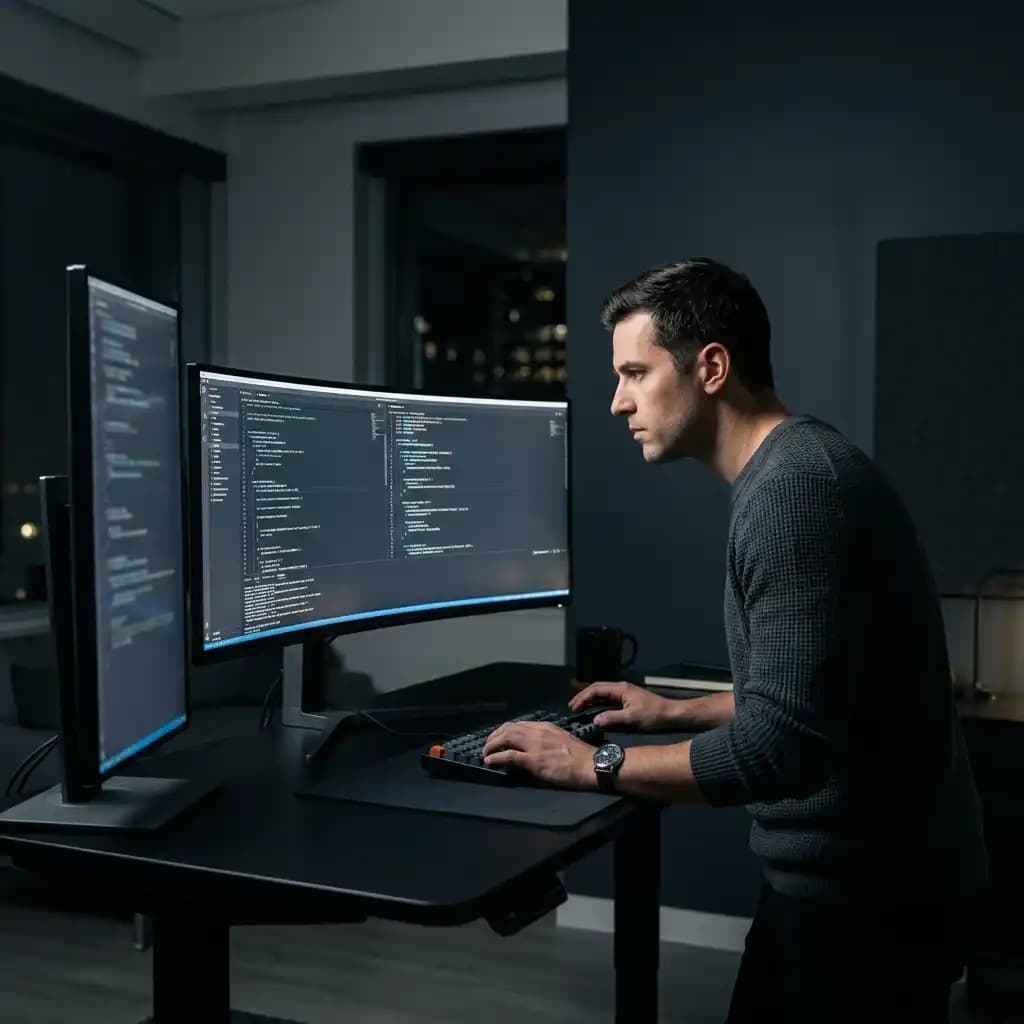
Developers ask, AI answers, and code appears in seconds. It's faster than anything before.
But here's the quiet question nobody's answering fast enough: who reads it?
More code than anyone can check
Before AI, a person wrote each line. Slowly. And another person checked it. That checking caught mistakes.
Now AI can produce more code in an hour than a team used to write in a week. The writing got faster. The checking didn't. That gap is where the danger lives.
AI is a confident writer. That's the trap.
AI almost never says "I'm not sure." It hands you clean-looking code that seems right. Sometimes it is. Sometimes it quietly copies an old security hole it learned from. Sometimes it solves the wrong problem perfectly.
And because it looks tidy, people trust it without looking closely. Tidy and correct are not the same thing.
- Run automated security scans on every AI-generated code commit
- Add behavioral tests that verify business logic, not just syntax
- Flag any divergence between expected and actual output immediately
- Build regression coverage before AI-generated code reaches production
The checking has to get as fast as the writing
You can't go back to reviewing every line by hand. There's too much. So the checking itself has to get faster and automatic — tests that run on every change, security scans that catch old patterns, rules that prove the code does what your business actually needs.
Let AI write fast. Make the safety net just as fast.
Closing view
AI writing code is a genuine advantage. AI code that goes unchecked is a risk that grows quietly.
The teams who get the most from AI will be the ones who made their validation as strong as their output.