
Systems that don't talk to each other make your people do the talking.
Someone exports a list at 7 p.m. Someone else types the same customer into three tools.
You do not need to fix everything. You need to find the gap costing you most.
Manual data entry hides in plain sight
The work looks small because each handoff takes only a few minutes.
Across sales, billing, service, and reporting, those minutes become delays, errors, and tired people.
- The same customer gets entered more than once
- Reports disagree until someone checks the source
- Answers wait for the person who knows the workaround
- Month-end work stretches into the evening

The gap distorts every answer
Disconnected systems do more than waste time. They create several versions of the same business.
Sales sees one total. Finance sees another. Leaders wait while someone rebuilds the truth.
- Customer status differs between sales and billing
- Invoices wait for missing fields
- Forecasts start with manual cleanup
- Teams stop trusting shared reports
Fix the costliest handoff first
Start where the same work gets typed twice. Measure its delay, error rate, and staff time.
Then choose the smallest honest fix. That may be a connector, a project, or a replacement.
- Name the workflow and its business owner
- Map every tool, field, and manual step
- Price the rework, delays, and errors
- Test one connection before expanding the scope
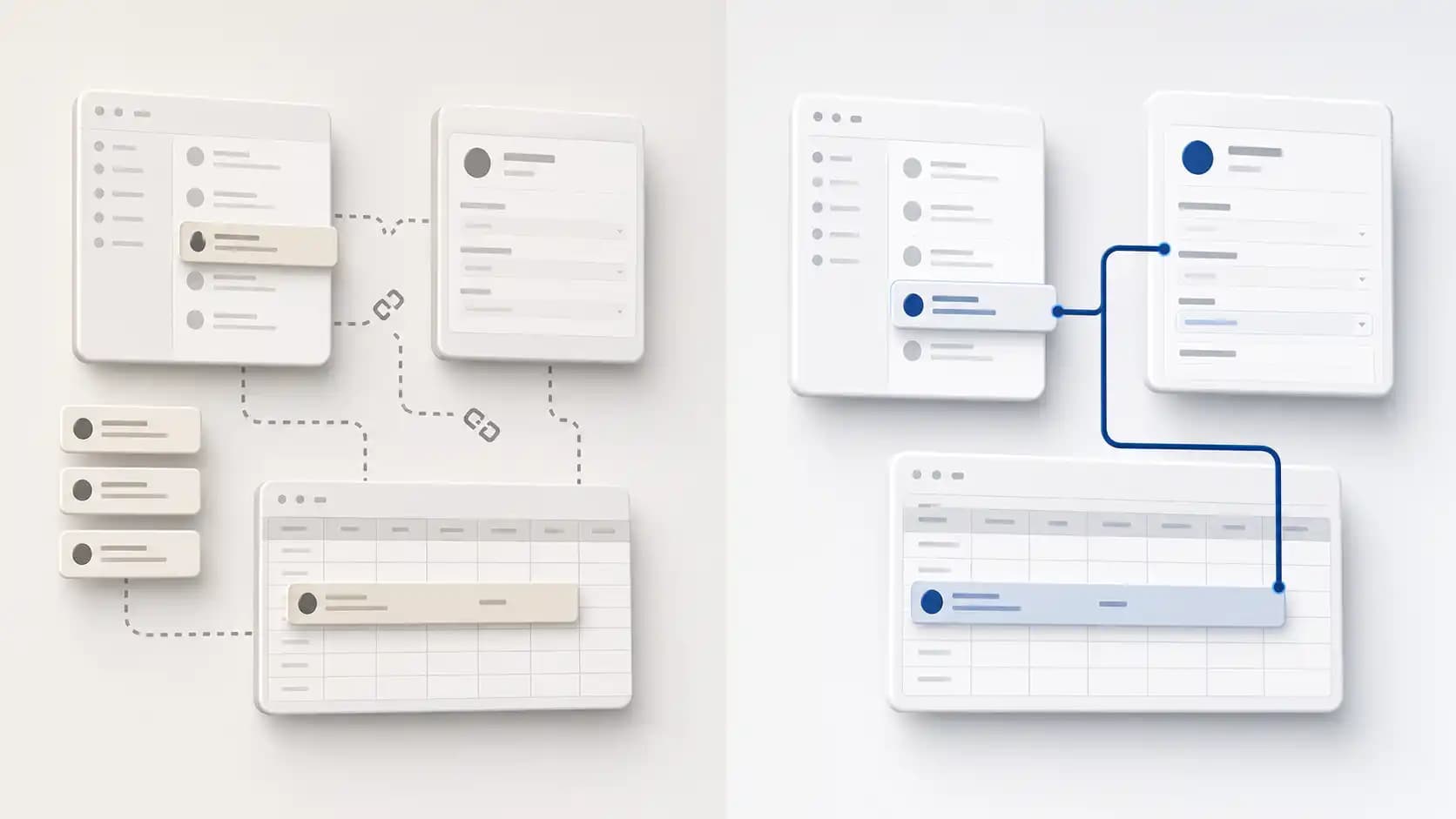
The right fix may be small
Some gaps need a simple API or platform connector. Others expose a tool that no longer fits.
Good system integration starts with judgment. The goal is less manual work, not a larger project.
- Connect when both tools still fit the work
- Redesign when the workflow causes the gap
- Replace when a tool blocks every sensible connection
- Add specialists when your team lacks the needed skill
Closing view
You bought each tool for a good reason. The hidden cost sits between them.
Your systems should do the talking. Not your people.