Look closely at any big company and you'll find it. A mountain of paper.
Forms. Invoices. Contracts. Scanned PDFs. Applications. Some of it is real paper. Most is digital paper — files a computer can open but can't actually read.
So who reads it? People. One document at a time. Typing what they see into a system, all day.
The invisible bottleneck nobody talks about
A claim can't move until someone reads the form. A payment waits until someone types in the invoice. A customer waits while their application sits in a pile.
It's slow. It's expensive. And humans make small mistakes when they do the same dull task all day. In banking and healthcare, those small mistakes cost a lot.
Machines can finally read
AI can now read a document the way a person does. It sees the form, finds the important parts, and puts them where they belong — automatically.
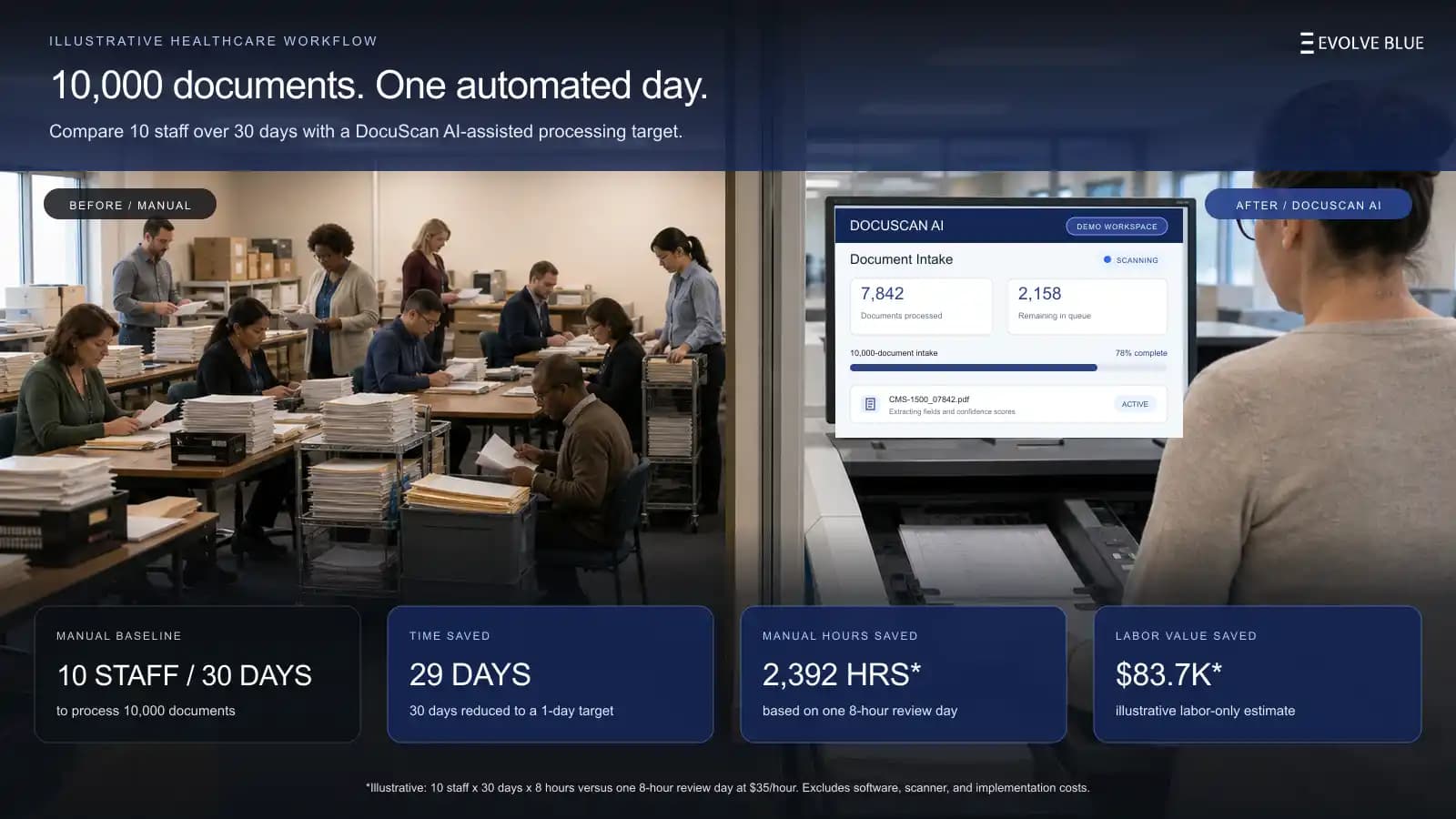
Not just typed text. Messy scans. Handwriting. Forms that never look quite the same. The hard stuff that used to need a human. The pile that took a team all week now clears in minutes.
- Extract data from unstructured forms, PDFs, and handwritten documents
- Route documents automatically based on type and content
- Cut manual data entry errors to near zero
- Scale document processing without scaling headcount
What you free up
The point isn't to remove people. It's to stop wasting them on retyping.
Give the dull reading to the machine. Give your people the judgment calls the machine can't make. The work speeds up, the errors drop, and your team does work worth their time.
Closing view
Your information was never the problem. It was just trapped in paper your computers couldn't read.
Now they can. Let them.