Big companies are not short on data. They're drowning in it.
The problem isn't having it. It's that it lives in separate rooms — and the rooms don't have doors. Sales here. Finance there. Customers over in the corner. Each system sure it has the full picture. None of them do.
So a person becomes the door. That is where the cost starts. It shows up as copy-paste work, slow approvals, broken reporting, and AI pilots that cannot trust the data they need.
Someone becomes the bridge
Someone logs into one system, copies a number, logs into another, and pastes it in. All day. Across the company, hundreds of people quietly do this. It's slow. It's boring. And every copy-paste is a chance to get it wrong.
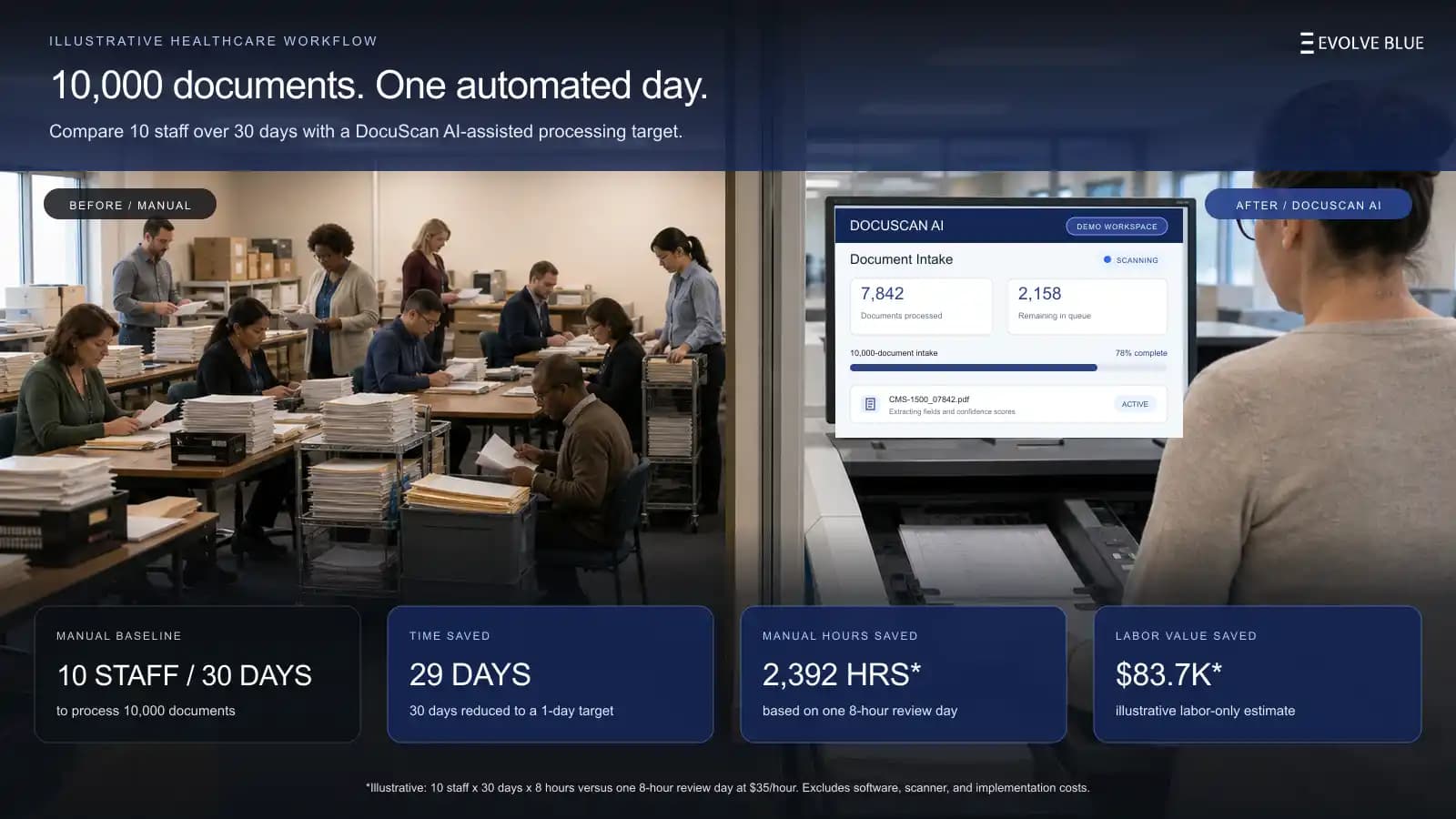
A mid-size company can lose 20 to 30 hours a week to manual data entry between CRM, billing, ERP, and reporting systems. That person is not the problem. They are a patch over the real one.
- Salesforce records get copied into billing by hand.
- ERP updates wait for someone to reconcile fields.
- Month-end close stretches because reports disagree.
- New hires learn which spreadsheet is the real one.
When systems don't talk, you lose trust in your own data
Two reports show two different numbers, because they pulled from two different systems. Now a meeting becomes an argument about whose number is right — instead of what to do about it.
You can't move fast when you don't believe your own data.
Disconnected systems make AI harder
AI does not fix a broken data path. It speeds up whatever data path you give it.
If CRM, ERP, service, and finance data disagree, AI only gives faster answers to the wrong question. Integration has to create the clean path first.
- Name which system owns each key field.
- Remove duplicate entry before adding AI steps.
- Set rules for data quality and exceptions.
- Track the handoffs that still need a person.
Integration is a bridge, not a rebuild
The fix doesn't mean throwing out your systems. It means building bridges between them. An integration lets your systems pass data to each other automatically — no copy-paste, one number everywhere.
Start with the costliest workflow. Map every tool, field, owner, and manual step. Then connect the highest-value path first so the human door gets to do real work.
- Eliminate manual data transfer between core systems
- Create a single source of truth for reporting and decisions
- Free your team from copy-paste work that adds zero value
- Enable real-time data flow so AI and analytics actually work
- Measure rework, wait time, and errors after release
Closing view
Your data already knows the answer. Integration is just letting the parts of your company finally hear it.
The copy-paste tax is real. And you're paying it every day.