WordPress hosting costs $20 a month. That part is cheap. But hosting was never the expensive part.
The real cost hides in the hours your team spends updating plugins, fixing theme conflicts, patching security holes, and rebuilding layouts that broke after the last update. Those hours add up every month — and they never stop.
At some point, you are not running a website. You are running a maintenance operation.
Hosting is not where the money goes.
A WordPress hosting plan runs $20 to $100 a month. That number feels small. It is small. But it only covers the server. It does not cover the work that keeps the site alive.
The real spend is labor. Someone has to update plugins. Someone has to test whether the update broke the layout. Someone has to patch the security hole that showed up overnight. That someone costs real money — every single month.
Plugin updates are the quiet drain.
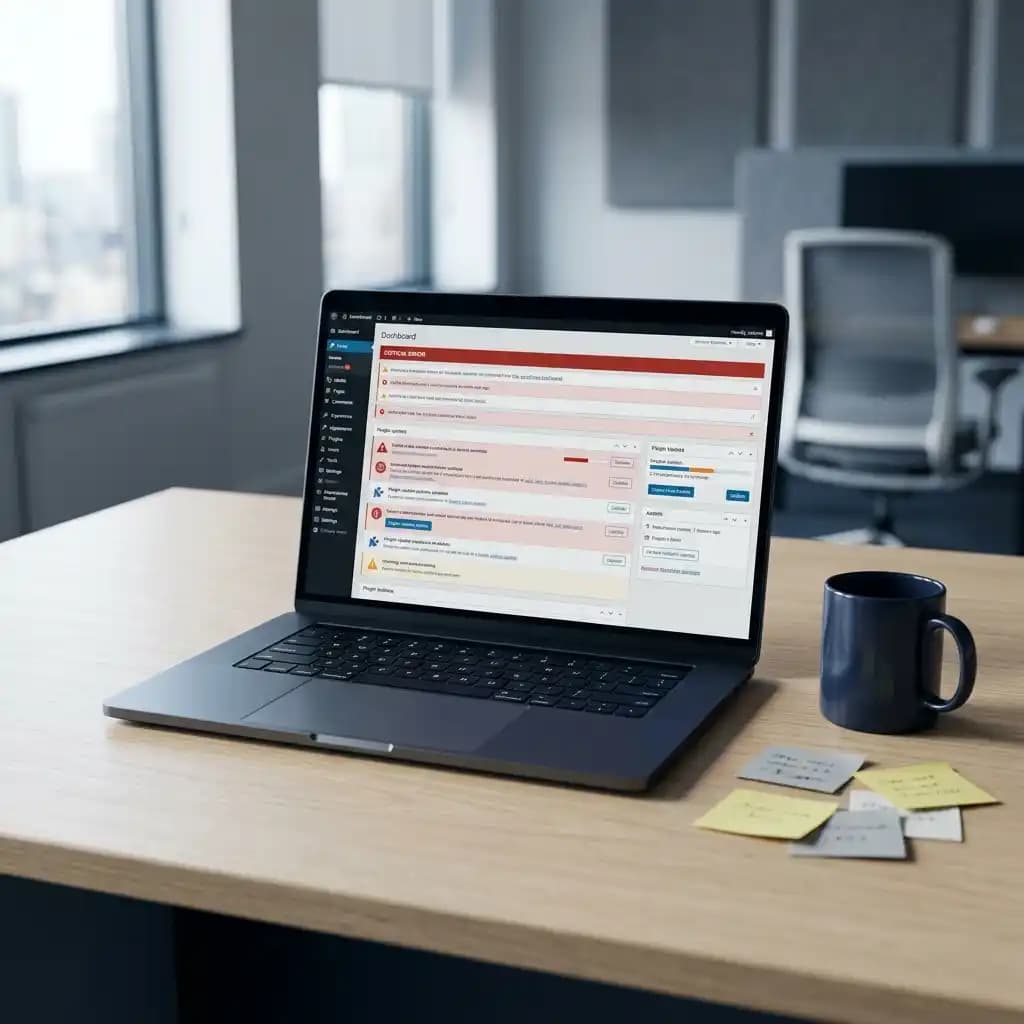
A typical WordPress site runs 20 to 40 plugins. Each one updates on its own schedule. Each update can conflict with another plugin, break a page layout, or expose a new security gap.
Your team updates one plugin and the contact form stops working. They roll it back and a different plugin throws a warning. They spend half a day testing combinations. Next month, it happens again.
- Plugin updates that break page layouts or forms
- Theme updates that override custom design work
- Security patches that need testing before going live
- Slow load times from plugin bloat stacking over years
- Developer hours spent fixing things that were working last week
The business impact is bigger than the hosting bill.
A slow site loses visitors. Google ranks slow pages lower. A contact form that breaks for two days means leads you never see. A security breach means customer trust you cannot buy back.
None of these show up on the hosting invoice. But they cost more than the hosting ever will.
- Slow page speed pushes your site down in Google search results
- Broken forms and pages mean lost leads and lost revenue
- Security gaps put customer data and your reputation at risk
- Developer dependency means every small change needs outside help
Know when to stop patching and start modernizing.
WordPress is a good tool. It powers millions of sites. Not every company needs to leave it. But there is a clear line: when the cost of keeping WordPress running exceeds the value it delivers, maintaining it is no longer practical. It is a drag on the business.
If your team spends more time fixing the site than improving it — if every update is a risk and every page loads slower than last year — the better move is to rebuild on a faster, cleaner platform.
Evolve Blue's WordPress Maintenance Escape Package.
Evolve Blue helps businesses move off WordPress without losing what they built. We convert existing WordPress sites into modern, fast, SEO-safe web platforms. The content, URLs, metadata, and analytics stay intact. The plugin dependency, slow speed, and monthly maintenance cycle go away.
We protect everything that matters during the move. Your search rankings, your redirects, your sitemap, your tracking — all preserved. Your visitors see a faster, cleaner site. Your team stops spending hours on updates that break things.
- All existing content migrated and preserved
- URL structure and redirects maintained for SEO continuity
- Metadata, Open Graph tags, and structured data carried over
- Sitemap and analytics connections kept intact
- Page speed improved — no plugin bloat, no theme overhead
Closing view
WordPress is not the problem. The maintenance cycle is. When updates break things, speed drops every quarter, and your team spends more time fixing the site than growing the business — the math has already changed.
Stop paying the maintenance tax. Request a WordPress Modernization Assessment from Evolve Blue and find out what your site looks like without the drag.