A designer changes a button color in Figma. It takes five minutes. Six months later, three teams still ship the old color. Nobody decided to keep it. Nobody had time to fix it.
The gap keeps growing. Web shows one spacing rule. Mobile shows another. Storybook still lists a component nobody uses. The documentation describes a screen that shipped a year ago. New hires read it and build the wrong thing, with total confidence.
Most companies try to close this gap with more meetings. A weekly design review. A Slack channel for handoff questions. A shared spreadsheet nobody updates. None of it works, because the problem was never communication. Design and code were never actually the same system.
Design and code live in two different worlds.
Design lives in Figma. Code lives in a repository. Nobody built a bridge between them. So every change becomes a message passed by hand, from designer to developer, hoping nothing gets lost.
A designer updates a spacing token and tells no one. An engineer patches a color to fix a bug and tells no one either. Weeks later, two teams build the same dropdown two different ways. Neither knew the other one existed. Documentation never hears about any of it.
- A Figma update and a code fix happen in two places, with no link between them
- Two teams build the same component twice, slightly differently, because neither could see the other's version
- Documentation describes a version of the product that shipped months ago
- New employees, technical or not, have no single place to see what's actually live
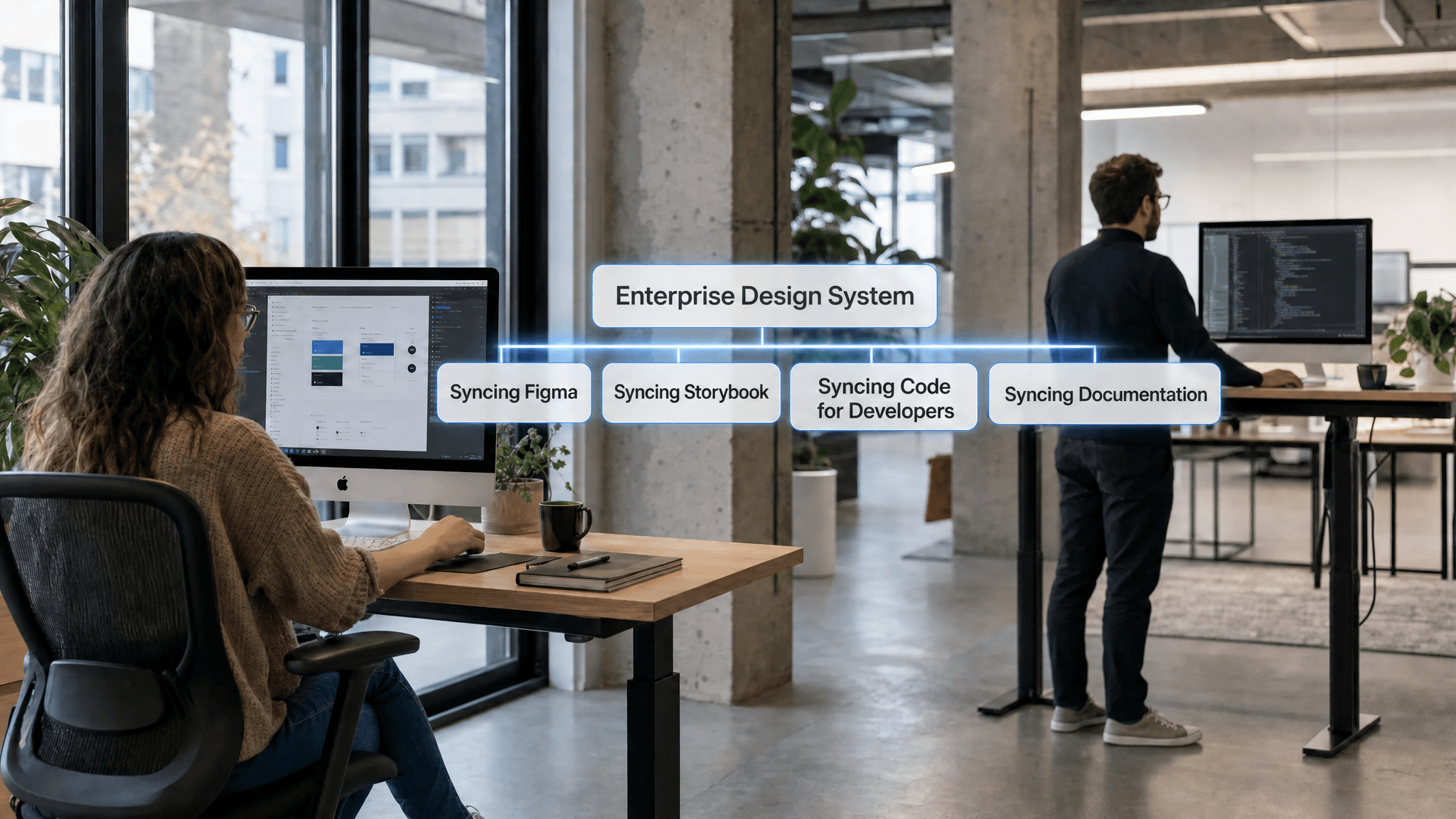
One system feeds every surface automatically.
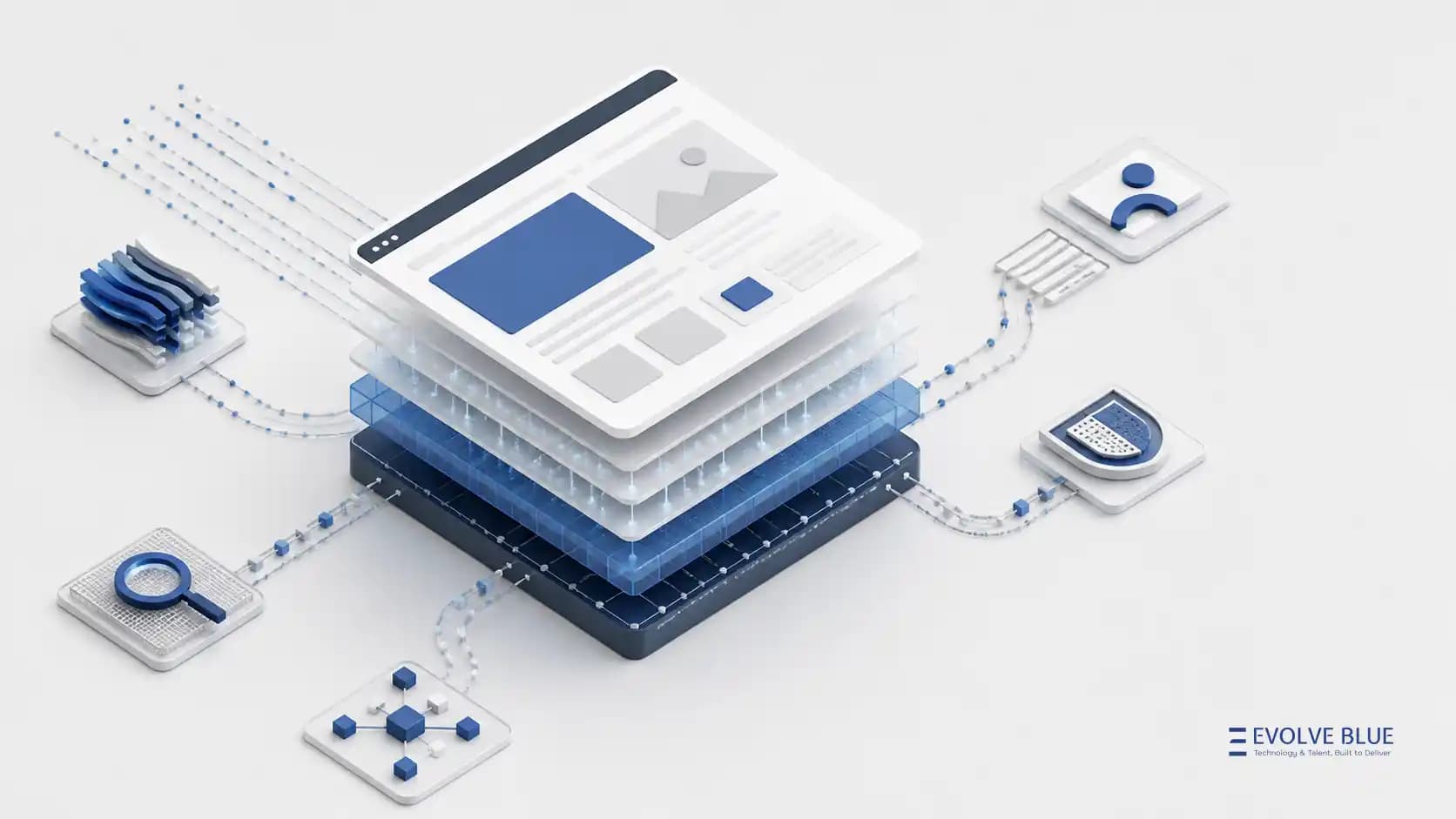
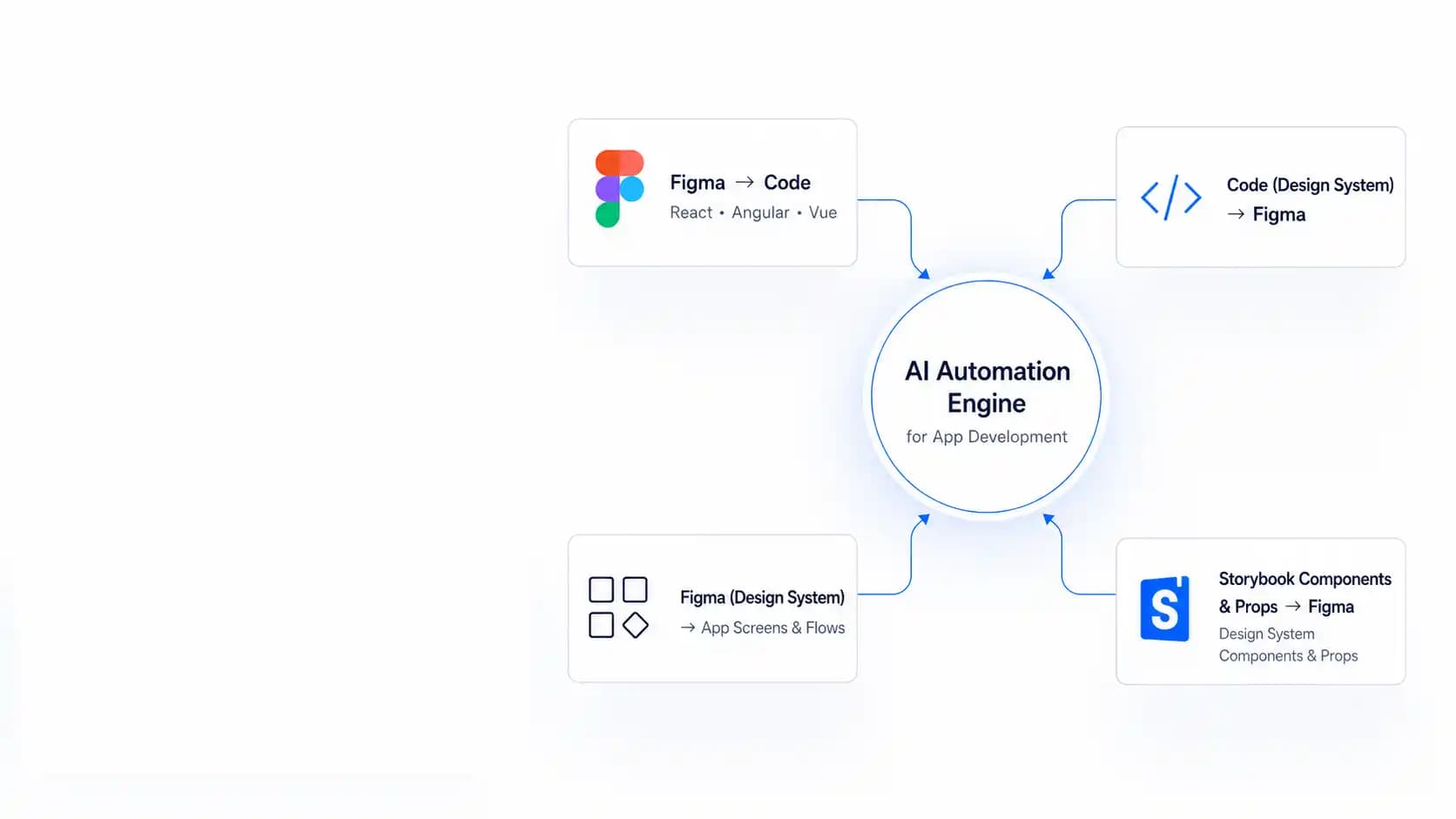
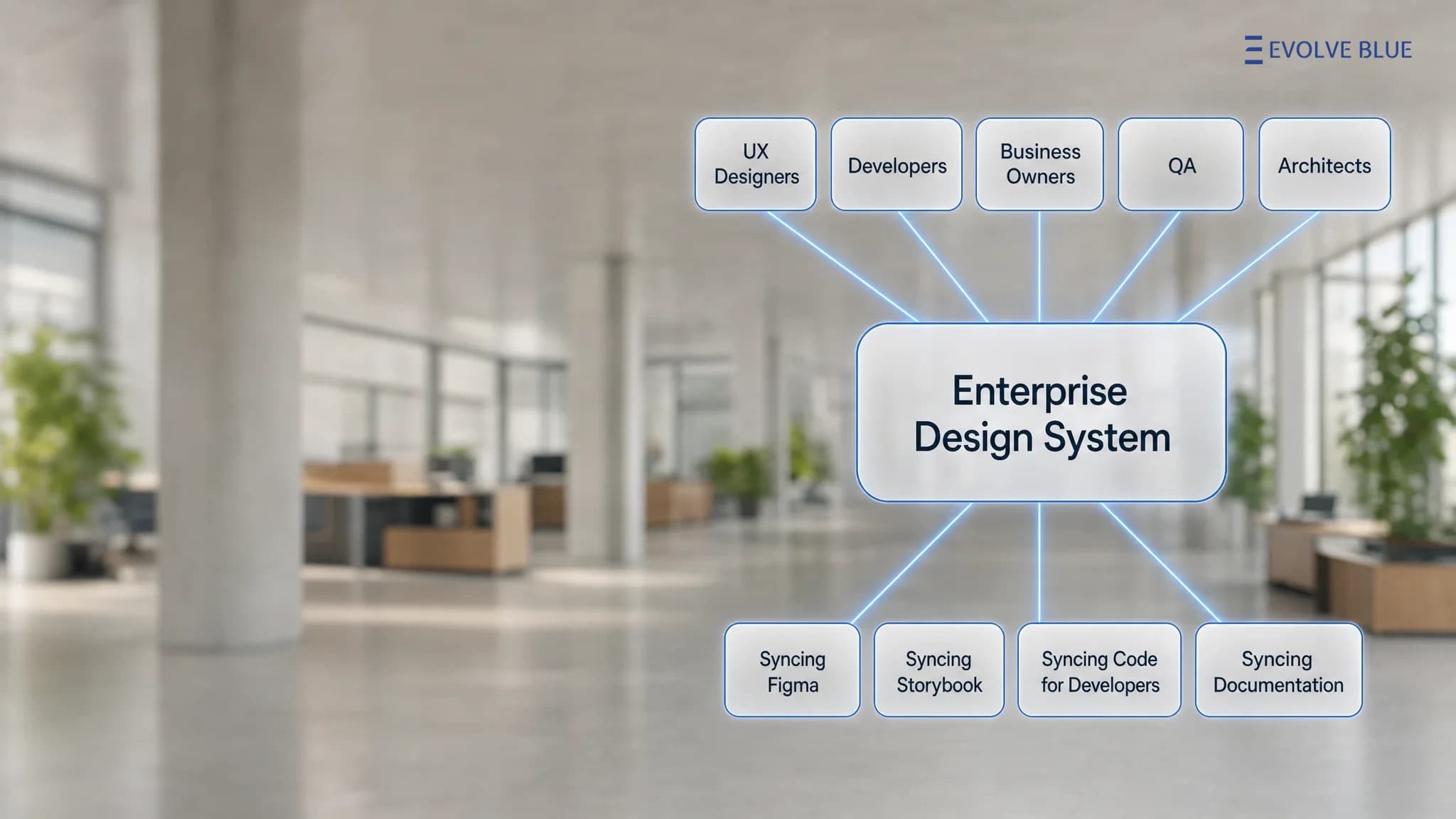
Evolve Blue builds one source of truth for the whole design system. Every token, every component, every rule lives in a single place. Figma reads from it. Storybook reads from it. Your production code reads from it too.
Change a spacing value once, and it moves everywhere by itself. No export step. No handoff meeting. No engineer guessing what a designer meant. The system pushes the update to Figma, Storybook, and code at the same time, automatically.
- One token library feeds Figma, Storybook, and production code from the same source
- A single change propagates to every connected surface without a manual handoff
- Documentation updates itself alongside the component, so it's never out of date
- Every employee, technical or not, can open one link and see exactly what's live
Syncing Figma
Tokens and components update from the shared source.
Syncing Storybook
Every variant stays current with what design shipped.
Syncing Code
Production pulls the same tokens, with no manual handoff.
Syncing Docs
Documentation updates alongside the component.
The rollout takes weeks, not months.
This isn't a two-year platform overhaul. Evolve Blue starts by auditing your existing components and tokens. Then we wire them into one pipeline that feeds every tool your teams already use.
Most enterprises see their first synced components live within weeks. Full documentation goes live alongside them. Every employee can see the current design, and how to use it, the day it ships.
- Week 1: audit existing components and tokens across web and mobile
- Weeks 2-3: wire the shared source into Figma, Storybook, and the codebase
- Weeks 3-4: roll out synced components and publish live documentation
Closing view
Meetings were never the real fix. They just slowed down a system that was broken in two places at once.
Give design and code one shared source, and syncing stops being a job someone has to do. There was only ever one truth. Now it finally acts like one.