A Sitecore to WordPress migration can look safe on paper.
You keep the same pages, same paths, and same design. Then the team finds 3,200 pages and 100+ templates under the promise.
The real work is not redesign. It is mapping every pattern into a leaner CMS without making users relearn the site.
Manual CMS migration burns time
A large Sitecore estate is rarely a set of simple pages. It is templates, fields, components, redirects, media, and approval habits.
When that work is done by hand, three weeks becomes three months. Every exception becomes a meeting.
- 3,200 pages needed migration
- 100+ templates needed mapping
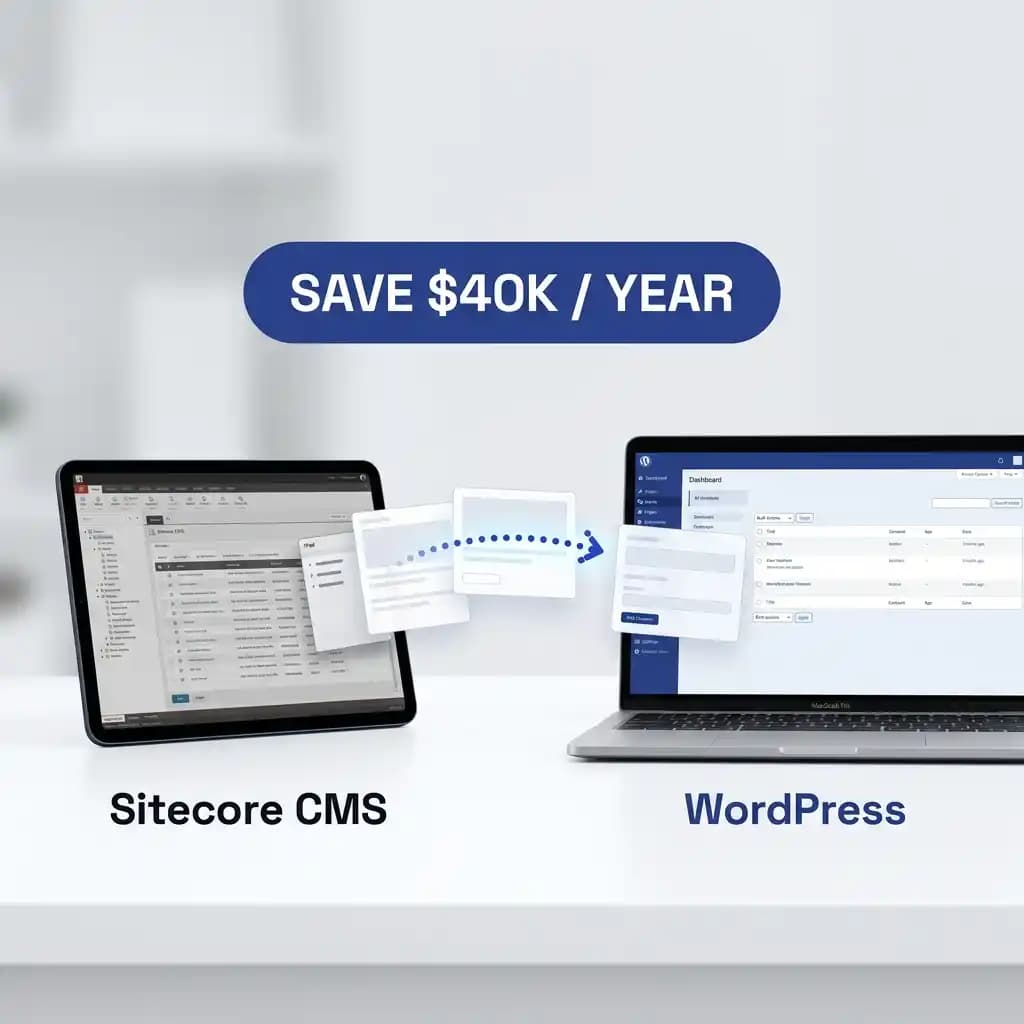
- About $40K a year sat in license and hosting overhead
AI agents preserve the user experience
The faster path starts before rebuild work. An AI agent crawls the site, learns the design system, and maps components to WordPress equivalents.
That turns same design into a delivery rule. Users see the experience they trust, while the business removes the legacy cost below it.
- Keep the front-end pattern stable
- Rebuild content into cleaner WordPress structures
- Check migrated pages against the source experience
Closing view
A migration is not only a platform swap. It is a chance to remove cost without shaking the customer experience.
If the old CMS is taxing the business, move the foundation before it decides the roadmap.