Imagine driving a car with the windshield painted black. The engine's running. You're moving. You just can't see where you're going.
That's a lot of companies running AI and cloud systems right now. The systems are working — they think. But no one can really see what's happening inside.
Hoping it's fine is not the same as knowing it is.
Hoping is not the same as knowing
When a system is small, you feel it when something's wrong. A person complains. You go look. But modern systems are huge and fast. By the time a person complains, the problem has been growing for hours.
You were hoping it was fine. You didn't know. Hoping is a bad way to run something important.
Watching AI is different — and harder
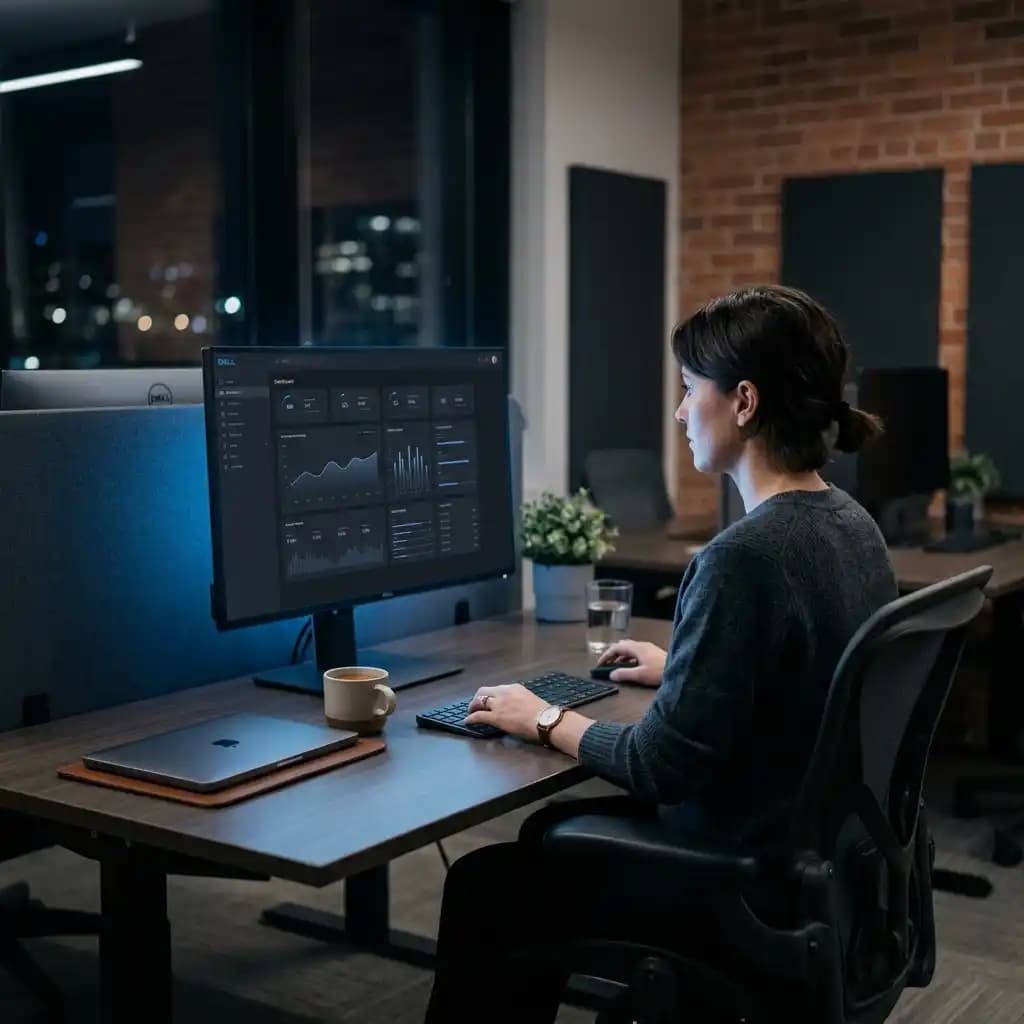
With normal software, you watch one thing: is it up or down? AI is trickier. It can be perfectly "up" and still be wrong. It can quietly start giving worse answers as the world changes around it. Nothing crashes. Nothing alarms. It just slowly drifts.
So you need to watch more than "is it on?" You need to watch "is it still doing a good job?" That's a new kind of seeing.
- Track output quality over time — not just uptime
- Alert on drift: when answers change without a system change
- Log every decision the AI makes so you can audit and explain it
- Set baselines so you know what "normal" looks like before something goes wrong
Build the windshield first
The fix is called observability. A big word for a simple idea: make the system tell you what it's doing, all the time, in plain view. What did it decide? Why? Is it slower than yesterday? Is it drifting?
When you can see all that, a small problem shows up as a small problem — not as a customer disaster.
Closing view
You don't earn trust in a system by hoping. You earn it by seeing. The faster your AI runs, the more important the windshield becomes.
Paint it clear before you drive faster.