Enterprise integration feels urgent when your tools stop helping each other.
Each acquisition adds a platform. Each new team brings a workflow. Each quick AI add-on creates another place where data can stall.
At first, people bridge the gaps. They export, retype, clean, and check. Then the workaround becomes the business.
Manual work hides inside normal operations
The mess rarely announces itself. It looks like normal follow-up.
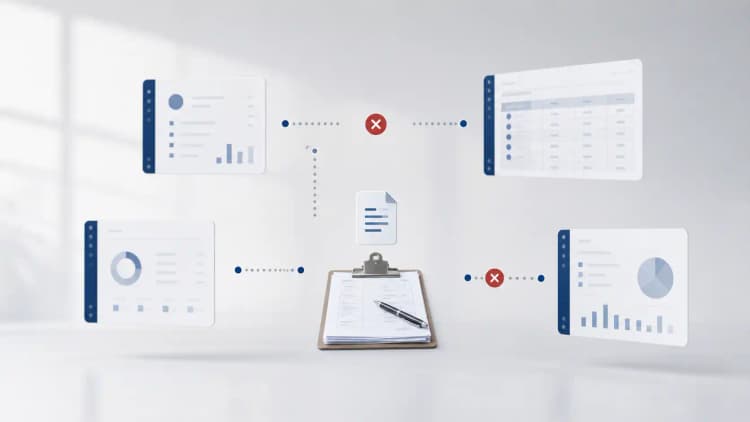
A sales update in Salesforce waits for billing. An ERP change needs a spreadsheet. Reporting depends on someone who knows the real number.
- Salesforce records are copied into billing by hand
- ERP updates wait for someone to reconcile fields
- Reports disagree until a person cleans the file
- AI pilots stall because source data does not match

Disconnected systems make AI harder
Fast AI add-ons need clean paths to useful data.
If CRM, ERP, and service data disagree, AI only speeds up confusion. It gives faster answers to the wrong question.
- Name the systems that own each key field
- Remove duplicate entry before adding AI steps
- Set rules for data quality and exceptions
- Track the handoffs that still need a person
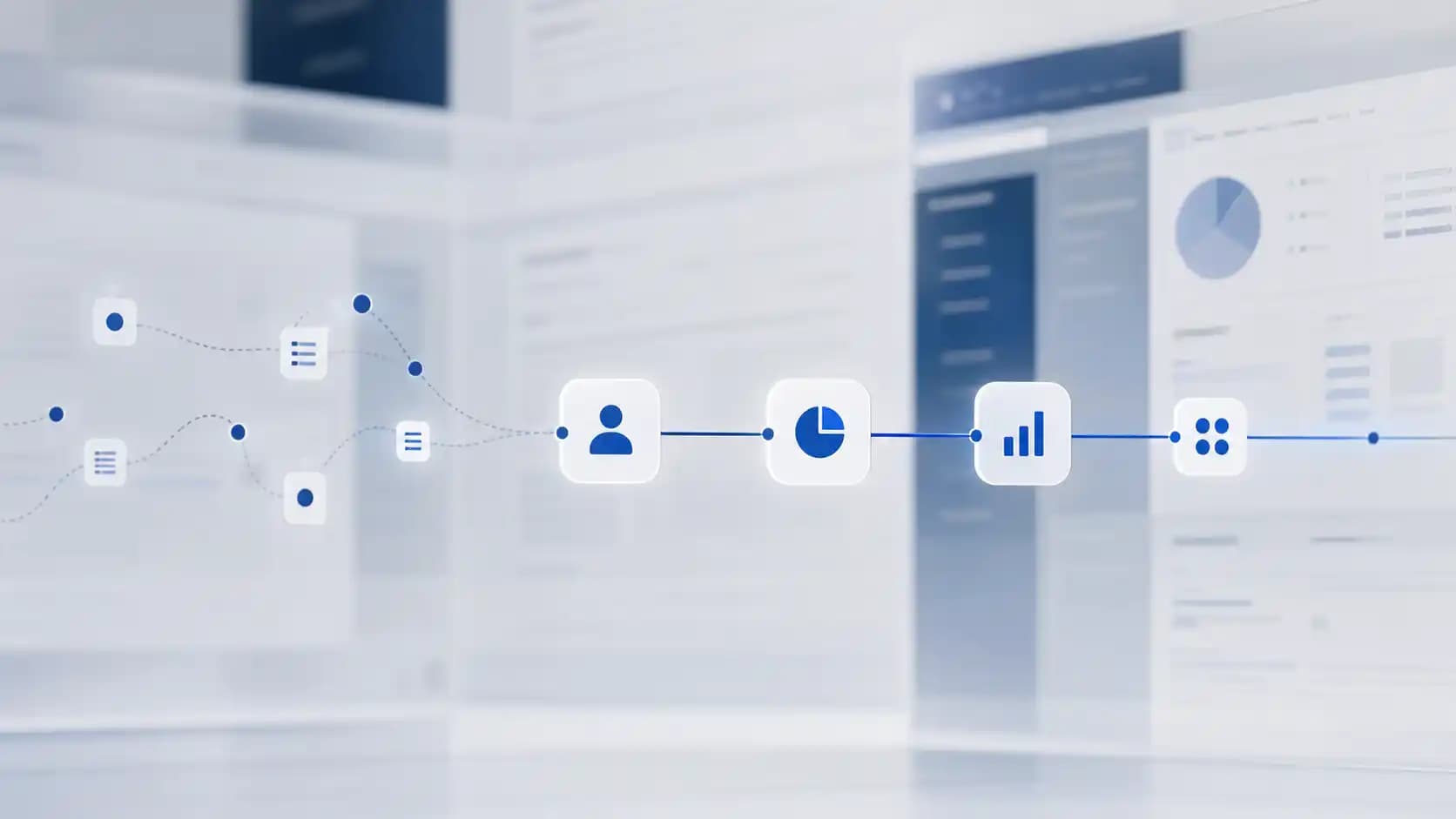
Enterprise integration turns dots into one line
The fix is not a bigger tool list. It is a clear path between the tools you already run.
APIs, Boomi, ERP connectors, and Salesforce flows matter most when they remove a handoff. The goal is one trusted movement of data.

Clean data gives people their time back
Once systems talk, the work changes shape.
People stop translating between screens. They check exceptions, improve process, and decide what the business should do next.
- Choose one workflow with visible drag
- Map each system, owner, field, and handoff
- Connect the highest-value path first
- Measure rework, wait time, and errors after release
Closing view
You do not need to rip out every system that growth left behind. You need the systems to stop making your people carry the gap.
When your systems finally talk, your people get to think again.