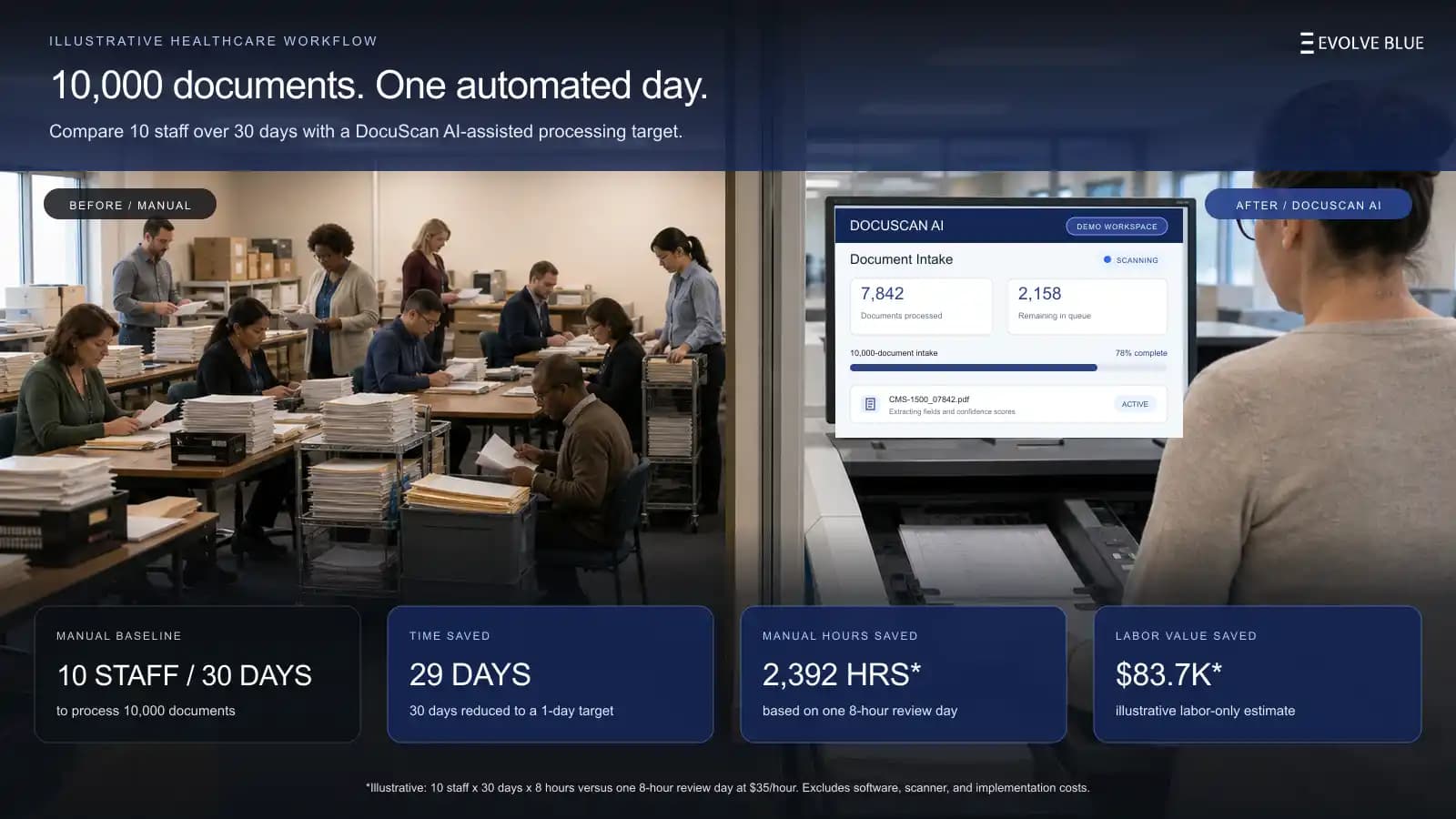
Document intelligence starts with an uncomfortable truth. Somewhere, a skilled person is retyping a PDF right now.
An invoice. A claim. A contract. An intake form. Each one pulls time away from judgment work.
The pile grows quietly. Then the business pays twice, once in labor and again in errors.
Manual data entry hides in expensive roles
Manual data entry rarely sits in one neat queue. It hides inside finance, care, claims, legal, and intake work.
People review the same PDF, copy the same fields, and fix the same mistakes. The cost looks normal until volume jumps.
- Invoices wait for line-item checks
- Claims stall over missing fields
- Contracts need dates and signatures pulled out
- Intake forms get copied into core systems

OCR alone does not finish the job
Basic OCR reads text. That helps, but it does not finish the job.
Your workflow still needs field rules, confidence scores, exception queues, and audit trails. Without that, people still clean the mess.
- Extract the fields that matter
- Score each value for confidence
- Flag missing or mismatched data
- Send exceptions to the right owner
Document intelligence routes the work
Document intelligence reads the document and understands the shape of the work.
It can pull invoice totals, claim numbers, dates, vendor names, and signatures. Then it sends exceptions to the right person.


The first win should be narrow
The best first rollout is not every document in the company. It is one costly queue with clear fields.
We build document intelligence into the workflow around it. Clean records move through, and exceptions leave a trail.
- Pick one high-volume document type
- Name the fields that matter
- Set confidence rules before launch
- Keep humans on exceptions
- Track time saved and errors avoided
Closing view
Regulated teams cannot trade accuracy for speed. They need less typing and more proof.
Stop paying skilled people to retype PDFs. Let them do the work only people can do.