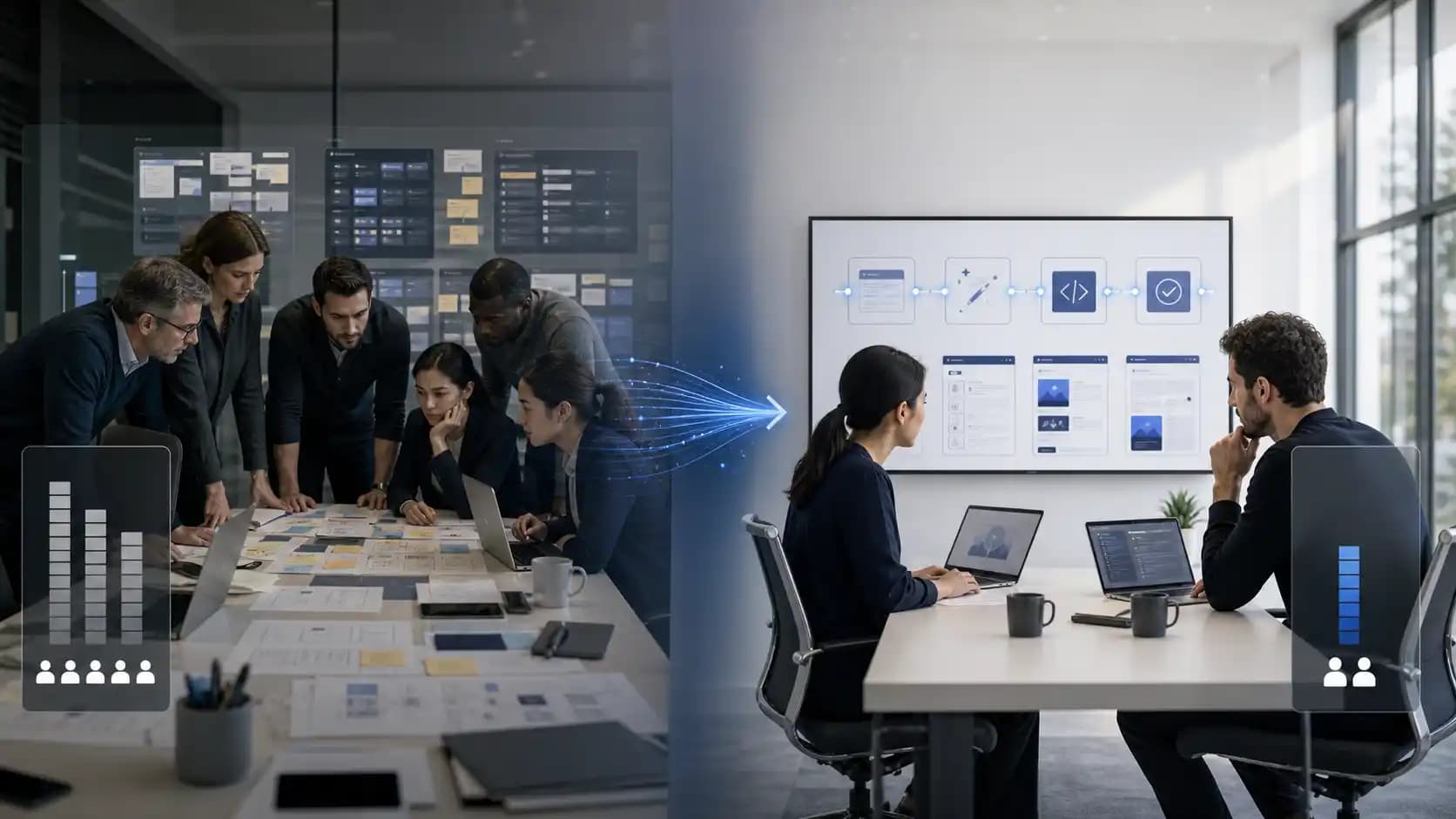
A legacy product team used to mean five people before a single feature shipped. Designer. Frontend. Backend. QA. DevOps. Roughly $30k a month — most of it spent on work that repeats.
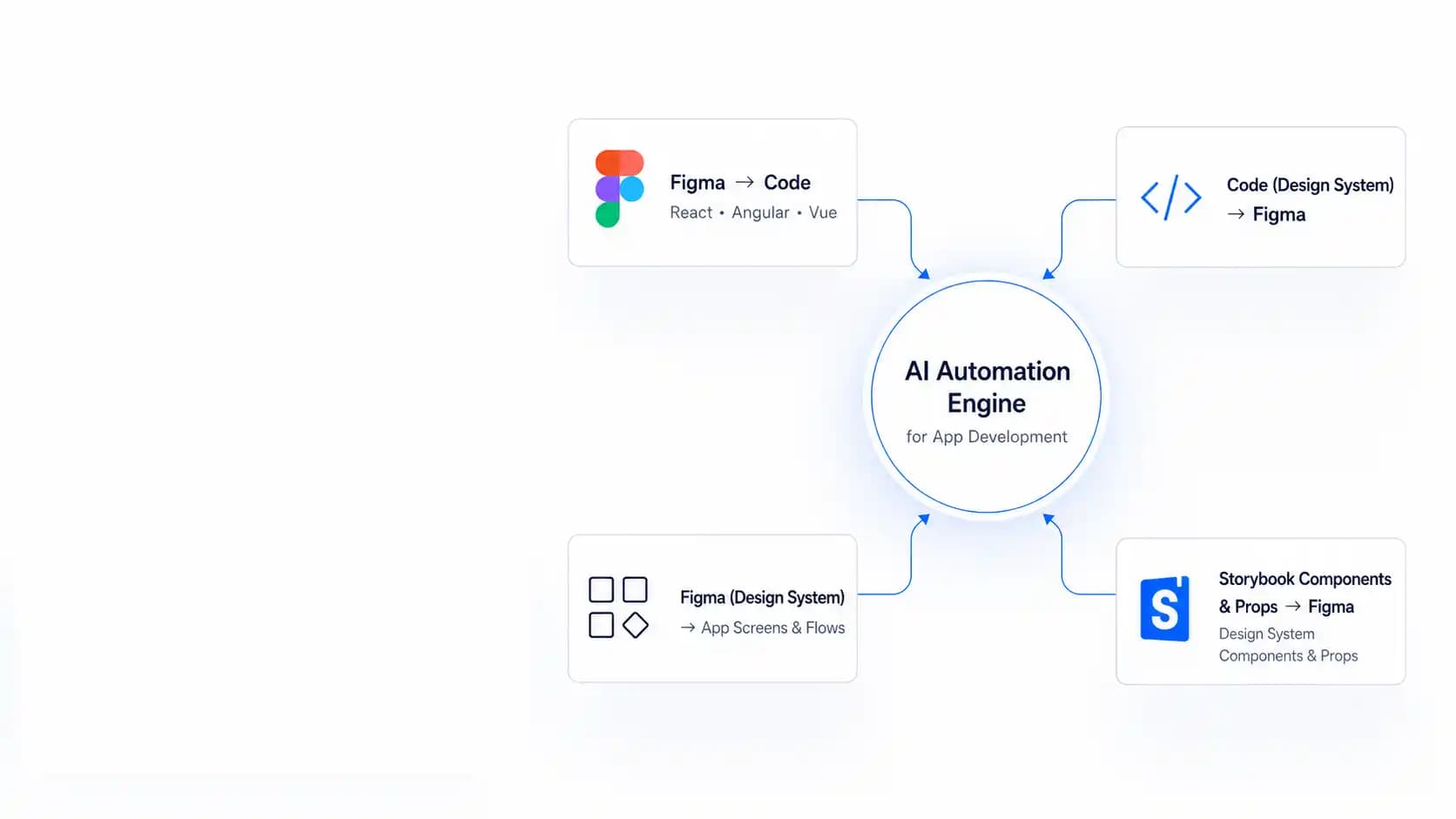
A documented design system generates UI instead of redrawing it. A full-stack engineer with AI tooling moves at the pace of three. Automated QA catches what manual testing misses. DevOps that deploys itself stops waking people at 2 a.m.
The result is not a smaller team. It is a smarter one. The same shipped product, closer to $10k a month — because the humans moved to the work that actually needs human judgment.
Most product team cost sits in repetitive work
Manual design redraw, hand-written test cases, slow deployment pipelines — these are not judgment calls. They are repetitive tasks that consume budget without adding insight.
When those tasks repeat across every sprint, every release, every new feature request, the cost compounds. And the people doing them are often the most skilled people on the team.
- Design systems generate UI — no redraw per screen
- AI-assisted engineering turns one engineer into three
- Automated QA runs more coverage than manual testing allows
- Self-healing deployment pipelines remove the 2 a.m. call

The fix is not headcount removal — it is headcount redeployment
Removing people is not the goal. Moving them is. AI tools handle the rote work. That frees a designer and full-stack engineer to own the work that still needs a human.
Onshore. Accountable. Faster. The cost drops because the repetition drops — not because the judgment dropped.


Where is your team spending money on work that repeats?
That is the right question. Not "how do we cut the team?" but "which parts of the sprint never needed a human in the first place?"
Architecture decisions, edge cases, compliance judgment, stakeholder alignment — these still need people. The repetition in between them does not.
- Audit your sprint for tasks that repeat every cycle
- Identify which QA steps could run automatically
- Check whether your design system generates or redraws
- Ask where your engineers spend time on deployment instead of product
- Move human judgment to architecture and edge cases — not copy-paste work
Closing view
The old model charged you for five people before a feature shipped. The new model charges you for the judgment those people actually provided.
Where is your team spending money on work that repeats? That answer usually unlocks the savings faster than any headcount conversation.