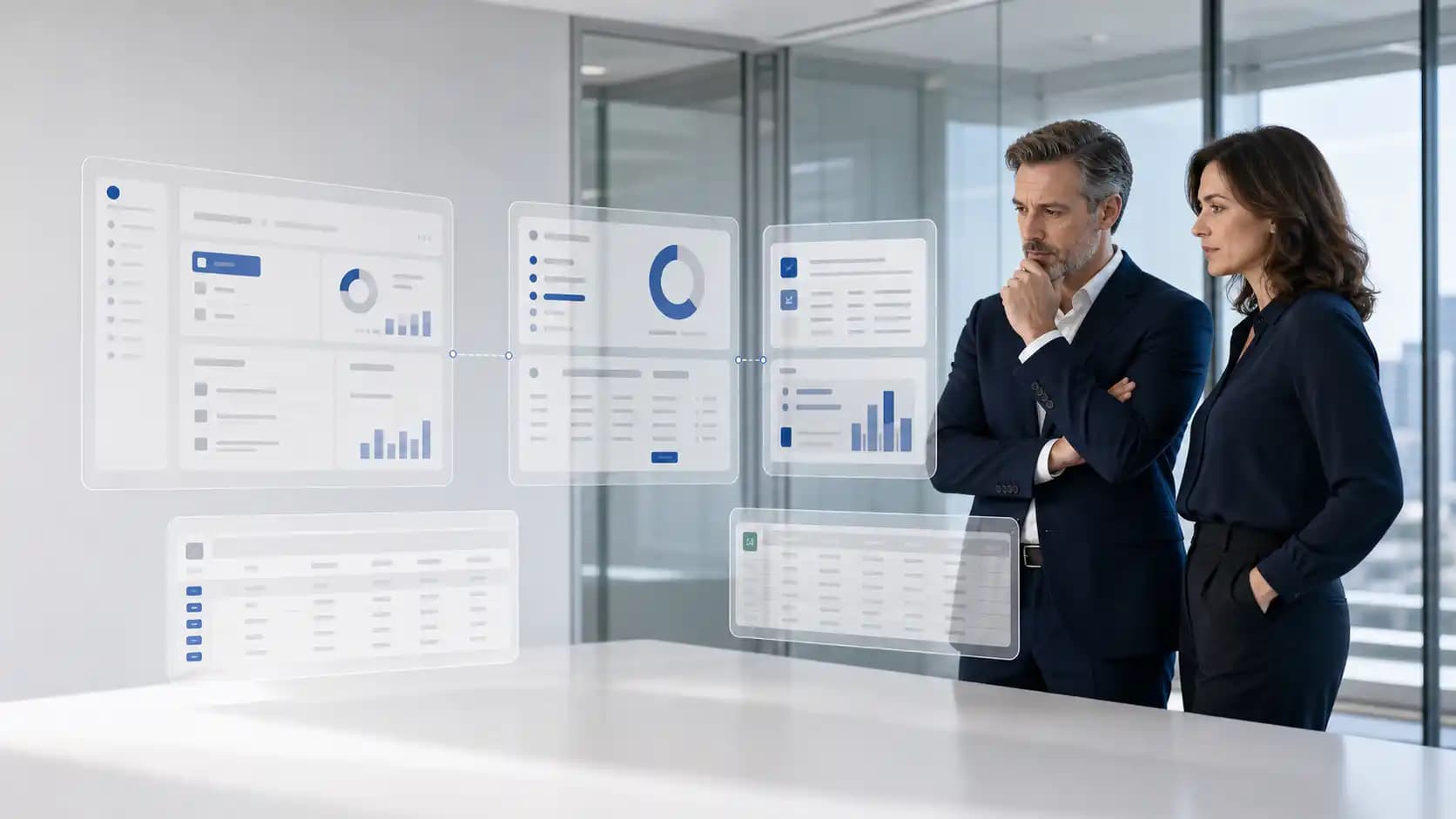
Somewhere in your company, someone spends most of their week copying numbers from one system into another. A deal in the CRM. A charge in billing. A claim status updated by hand in three places.
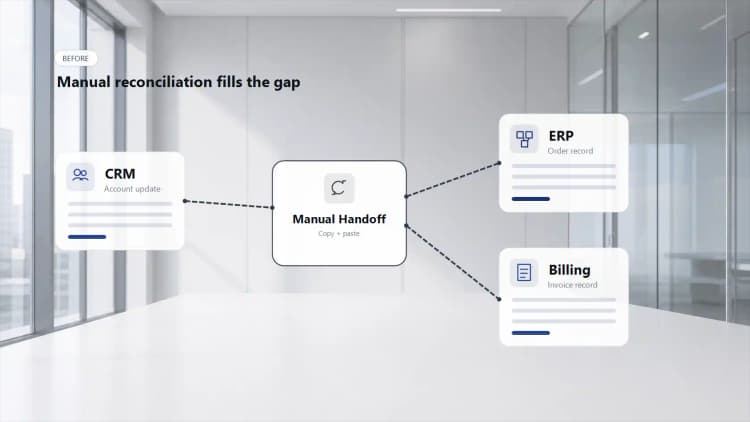
Sales closes a deal in Salesforce. Finance re-enters it in the billing system. Operations checks both against the ERP before anything ships. Each handoff adds a delay. Each retype adds a chance to get it wrong.
Add up those hours across a year, and the number gets hard to ignore. You're not looking at a minor inconvenience. You're looking at a salary. It just never shows up as its own line item — it's spread across a dozen people instead.
Manual data entry hides inside everyone's job
A mid-size company can lose 20 to 30 hours a week to manual data entry. That work moves between CRM, billing, and ERP systems. That's close to three-quarters of a full-time role. It's spent on work that would never appear on anyone's job description.
The cost never shows up on one invoice. It's spread across sales coordinators, billing clerks, and ops analysts — an hour here, an hour there. No one owns that time, so no one ever gets it back.
- A closed deal in Salesforce gets retyped into the billing system by hand
- Support sees one version of an account, finance sees another
- Month-end close takes days because the numbers from each system don't match
- New hires spend their first weeks learning which spreadsheet is the real one
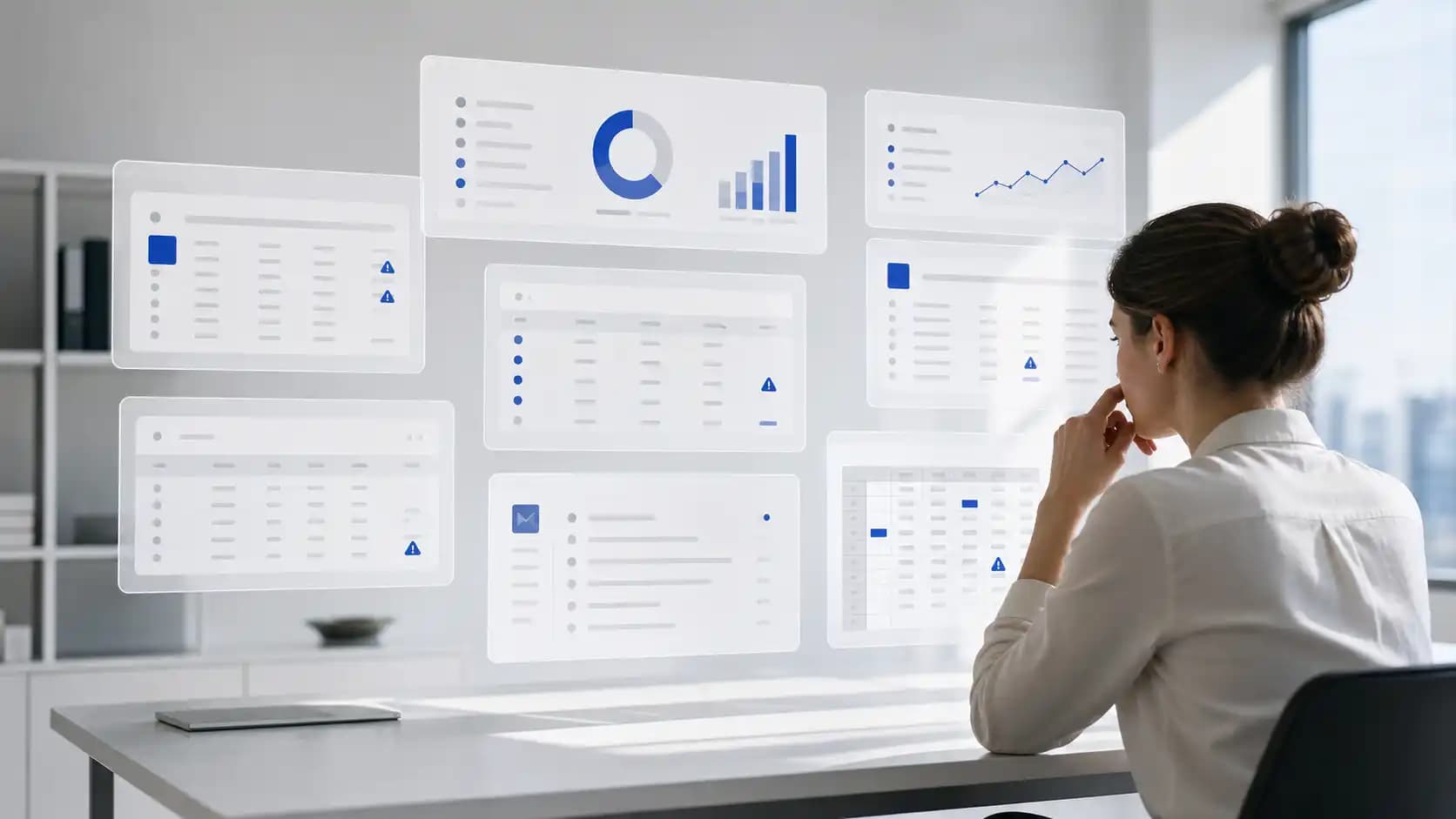
Every new tool adds another translator
Every time you add a tool, you add a translator. A new CRM plugin here, a reporting tool there — each one speaks its own language. Someone in the middle still has to translate.
Middleware like Boomi can fix this, but only if it connects the systems that matter most. A platform with ten integrations and one missing link still needs a human in between.
Connected systems give that job back
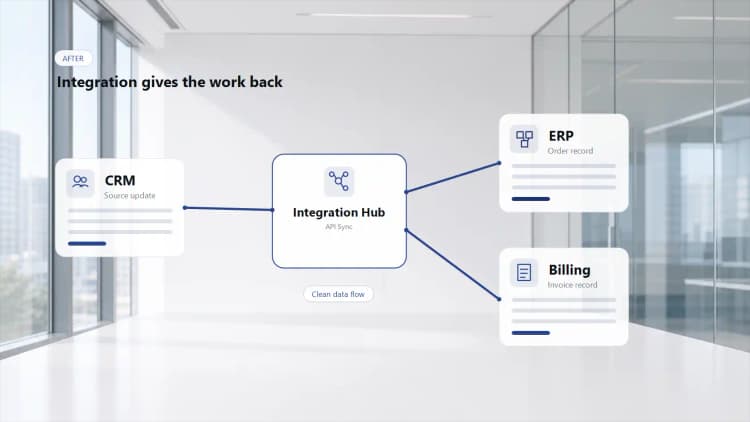
When systems share data on their own, the full-time job disappears. No one gets let go. The work that filled their week simply stops existing.
A deal closed in the CRM updates billing and the ERP in real time. Claims move from intake to processing without a single retype. The person who did that data entry now does work that actually needs a person.
Closing view
Disconnected systems don't show up as a line item on a budget. They show up as a person, quietly doing work that software should handle.
Integration isn't a tech upgrade for its own sake. It's how you get that person's time back — and let the data move on its own.